
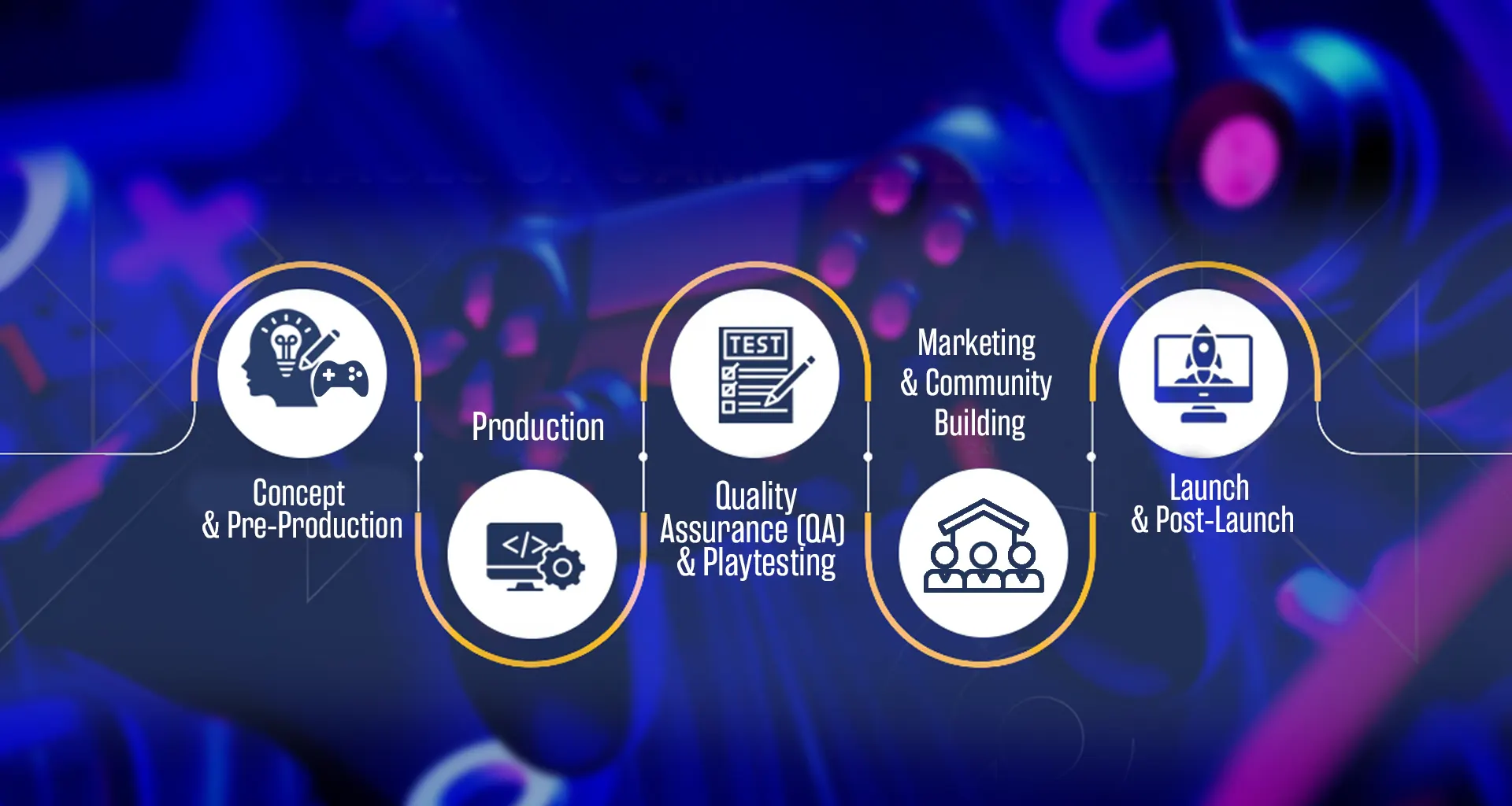

Bringing a game to life is an exciting but complex process. Whether you’re dreaming of launching your own indie game or curious about how major studios operate, understanding the game production pipeline is crucial. From the first idea to the final release, each stage requires careful planning, collaboration, and execution.
Let’s break down how games go from concept to launch, giving you a roadmap of the production process.
1. Concept & Pre-Production: Laying the Foundation
Every game starts with an idea—but not every idea becomes a successful game. In this phase, teams focus on game design, market research, and feasibility.
- Game Design Document (GDD): Developers outline the core mechanics, story, characters, and level structure.
- Prototyping: A small, playable version is created to test mechanics before full-scale production.
- Market Research: Developers analyze trends, competitors, and target audiences to ensure their game has demand.
- Budget & Timeline: Teams estimate costs, team size, and development time, often using project management tools like Trello or JIRA.
Many projects fail because they skip this phase—having a solid foundation makes the next steps much smoother.
2. Production: The Heart of Game Development
Once the concept is validated, production begins. This is the longest and most resource-intensive phase, where the game truly takes shape.
- Game Development: Programmers write the code that powers the game using engines like Unity or Unreal Engine.
- Art & Animation: Artists design characters, environments, and UI, while animators bring them to life.
- Sound & Music: Audio engineers create immersive sound effects and music that enhance the experience.
- Level Design: Designers build worlds that balance challenge and player engagement.
Communication between teams is crucial—without it, even great ideas can get lost in production bottlenecks.
3. Quality Assurance (QA) & Playtesting: Fixing Bugs Before Release
A game is only as good as its player experience, and this stage ensures everything works smoothly.
- Bug Fixing: Testers identify and report issues, from crashes to minor glitches.
- Performance Optimization: The game is tested across different devices to ensure smooth frame rates and stability.
- Playtesting: Internal and external testers provide feedback on difficulty, mechanics, and enjoyment.
Skipping thorough QA can ruin a game’s launch—players today expect polished, bug-free experiences.
4. Marketing & Community Building: Creating the Hype
Even the best games fail if no one knows about them. Marketing and community engagement are critical.
- Pre-launch Hype: Trailers, social media, and influencer partnerships generate interest.
- Game Monetization Strategies: Whether it’s free-to-play, premium, or microtransactions, developers choose models that fit their audience.
- Beta Testing & Early Access: Some games launch betas or early versions to gather feedback and build a player base.
Successful studios don’t just create games—they build brands and communities around them.
5. Launch & Post-Launch: The Real Work Begins
The launch is just the beginning. To stay relevant, developers must focus on live operations and updates.
- Day-One Patch: Many games release updates on launch day to fix last-minute issues.
- DLCs & Seasonal Content: Adding new content keeps players engaged long-term.
- Live Events & Esports: Competitive gaming and limited-time events help maintain excitement.
Games that continue evolving retain players and increase revenue, making post-launch support just as important as development.
Want to Learn More About Game Production?
Understanding game production is one thing—applying it is another. If you’re serious about entering the gaming industry, learning from real-world professionals can give you the edge.
The right industry insights, practical knowledge, and hands-on experience can set you apart, whether you want to develop, publish, or manage games.
Exploring structured learning paths can help you turn your passion for gaming into a career. The industry is growing—are you ready to be part of it?