
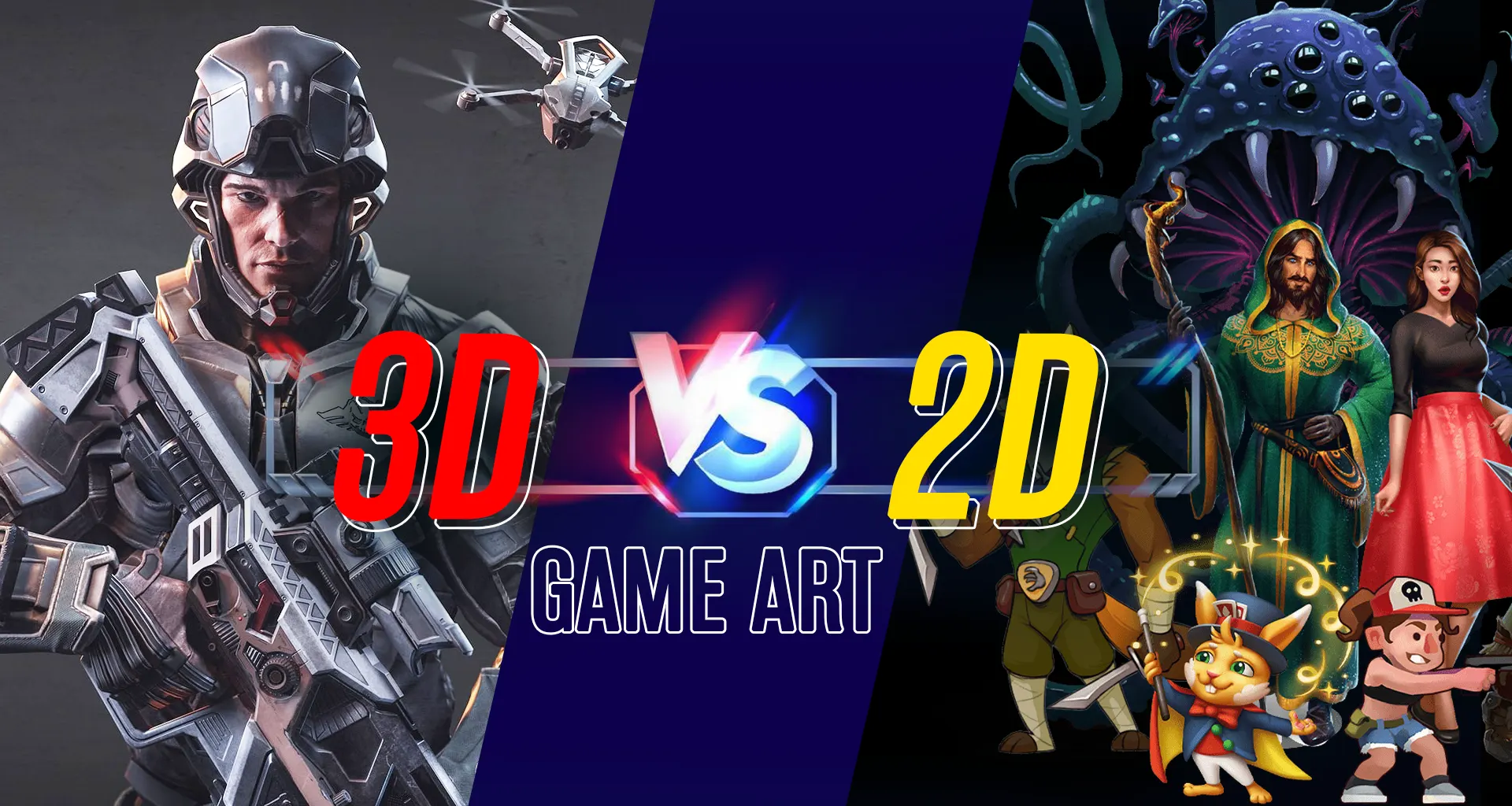

The world of game art is vast, with two dominant styles—2D and 3D. Whether you’re just starting or looking to specialize, choosing between 2D and 3D game art can shape your career path. Both styles play a significant role in the gaming industry, from mobile games to AAA console titles. The real question is: which one should you focus on?
Understanding the Differences
What is 2D Game Art?
2D game art refers to flat, two-dimensional visuals created using digital painting, vector graphics, or pixel art. Games like Hollow Knight, Celeste, and Among Us showcase the beauty and depth possible within 2D.
Common 2D art roles include:
- Concept Art: Sketching and designing characters, environments, and props.
- Pixel Art: Creating detailed images with pixel-level precision, used in retro-style games.
- UI/UX Design: Designing game menus, icons, and in-game interfaces.
- 2D Animation: Bringing characters and objects to life through frame-by-frame or rigged animation.
Tools Used: Adobe Photoshop, Illustrator, Krita, Aseprite, Spine
What is 3D Game Art?
3D game art involves creating assets with depth, volume, and realism. It’s commonly used in modern PC, console, and mobile games, such as The Legend of Zelda: Breath of the Wild, Fortnite, and Genshin Impact.
Common 3D art roles include:
- 3D Modeling: Creating objects, characters, and environments.
- Texturing & Shading: Adding colors, patterns, and material details.
- Rigging & Animation: Preparing 3D models for movement and animating them.
- VFX (Visual Effects): Designing in-game effects like explosions, fire, and weather.
Tools Used: Blender, Maya, ZBrush, Substance Painter, Unity, Unreal Engine
Which One Should You Master?
Choose 2D if:
- You love hand-drawn and stylized visuals.
- You want to work on mobile, indie, or retro-style games.
- You prefer a faster production pipeline and a more artistic approach.
- You enjoy working with vector art, digital painting, or pixel art.
Choose 3D if:
- You’re interested in high-detail, immersive environments and characters.
- You want to work on AAA titles, realistic games, or VR/AR projects.
- You like sculpting, modeling, and working with physics-based assets.
- You’re drawn to animation, rigging, and complex visual effects.
Industry Demand: Where Are the Jobs?
Both 2D and 3D artists are in demand, but the opportunities vary.
- Mobile and indie games: Heavy demand for 2D artists, especially in UI/UX and animation.
- PC and console games: AAA studios prefer 3D artists for character and environment modeling.
- VR/AR industry: Strong focus on 3D artists to create immersive experiences.
- Freelancing and indie development: 2D artists find plenty of opportunities in smaller-scale projects.
Can You Learn Both?
Yes! Many game artists start with one and expand their skills over time. Learning both 2D and 3D can make you more versatile and open up more job opportunities. Some artists specialize in hybrid styles, such as 2.5D games that mix 2D visuals with 3D depth.
Where to Start?
The best way to choose is to experiment. Try creating both 2D and 3D assets using free tools like Krita or Blender. Follow tutorials, participate in game jams, and build a small portfolio to see what you enjoy most.
If you’re serious about breaking into game art, structured learning can accelerate your progress. Understanding professional workflows, industry tools, and portfolio-building strategies can give you a competitive edge.
Start small, practice consistently, and explore opportunities to turn your passion into a career. Whether you choose 2D, 3D, or both, game art is an exciting and rewarding field with endless creative possibilities.