
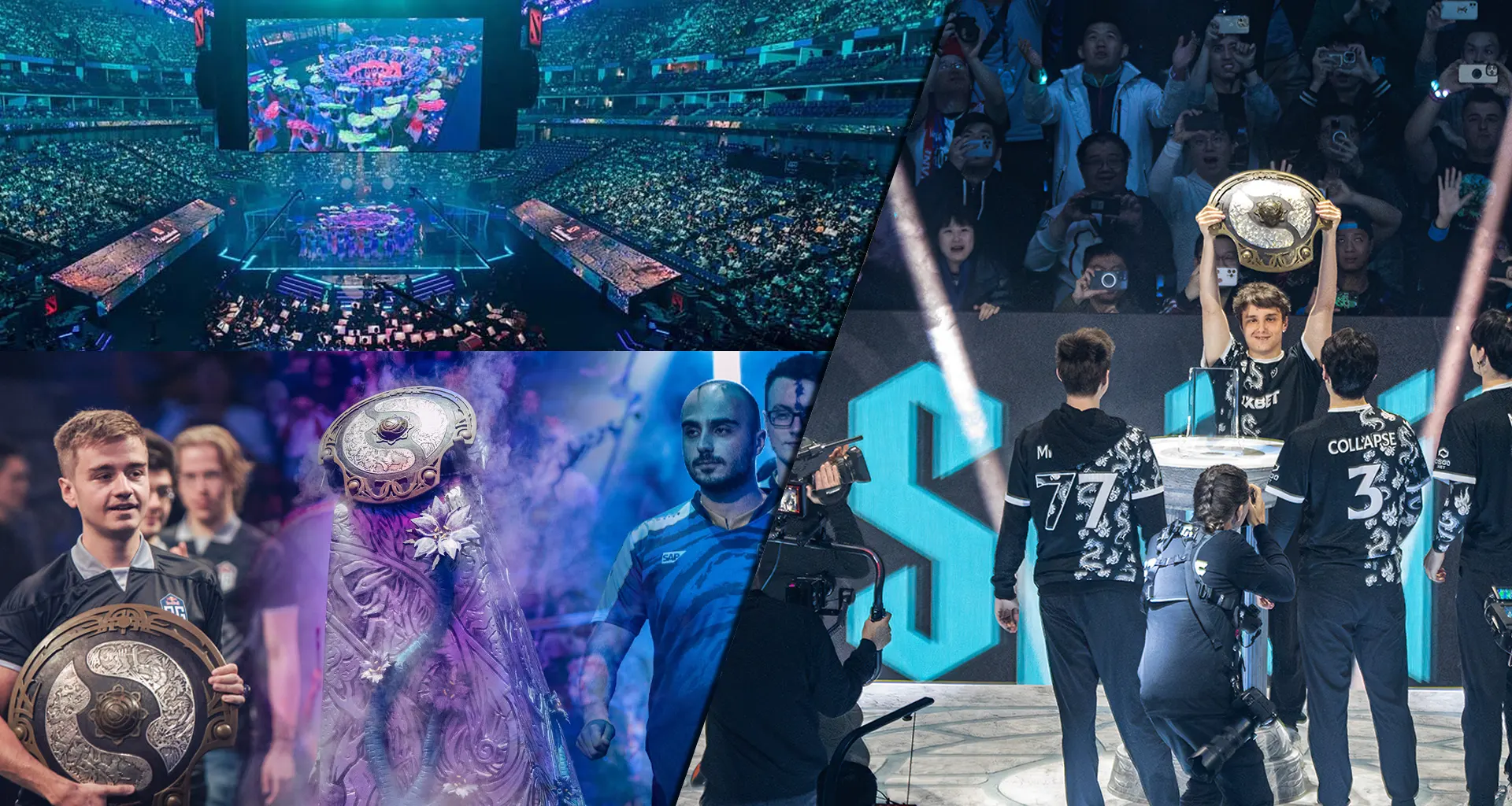

Esports has come a long way from basement LAN parties and local arcade competitions. Today, it’s a multi-billion-dollar industry with global audiences, top-tier production value, and prize pools that rival traditional sports.
At the center of this meteoric rise stands one event that redefined what was possible in competitive gaming: The International (TI)—Dota 2’s flagship tournament. From its humble beginnings in 2011 to its record-breaking $40 million prize pool in 2021, The International didn’t just grow, it changed the entire esports ecosystem.
The Beginning: A Bold Move by Valve
In 2011, Valve launched Dota 2 and needed a way to showcase its potential. Their answer? The first-ever International, held at Gamescom in Germany, had a jaw-dropping $1.6 million prize pool, unheard of at the time. The winner, Natus Vincere (Na’Vi), walked away with $1 million, instantly making Dota 2 one of the most lucrative esports titles.
This massive prize pool was a statement. Valve wasn’t just organizing another gaming tournament; they were setting the foundation for something much bigger, an event that would become the pinnacle of esports competition.
The Evolution: Bigger, Better, and More Money
After the success of the first TI, Valve did something revolutionary in 2013: they introduced the Compendium, a crowdfunding system where fans could buy in-game items, with a portion of the proceeds going toward TI’s prize pool. This move changed everything.
- TI3 (2013) jumped to $2.87 million in prize money.
- TI4 (2014) skyrocketed to $10.93 million.
- TI5 (2015) reached $18.43 million, making it the largest esports tournament in history at the time.
- By 2021, TI10 reached a staggering $40 million—the biggest prize pool in competitive gaming ever.
Each year, fans contributed millions, turning The International into an event that they helped build. It wasn’t just Valve’s tournament anymore, it belonged to the community.
How TI Changed Esports
1. Setting a New Standard for Prize Pools
Before The International, esports prize pools were nowhere near the millions we see today. TI’s success forced other game publishers to step up:
- Fortnite introduced its $30 million World Cup in 2019.
- League of Legends Worlds increased its payouts and revenue-sharing programs.
- CS: GO Majors and Valorant Champions followed similar structures.
TI proved that massive prize pools weren’t just possible, they were expected.
2. Crowdfunding Becomes the Norm
The Compendium model revolutionized esports funding. Other games adopted similar approaches:
- CS: GO introduced in-game stickers and team capsules.
- Rainbow Six Siege launched its own crowdfunding-based esports events.
- Even smaller titles implemented battle passes to support their competitive scenes.
TI showed the world that fans were willing to pay to support their favorite teams, making esports more sustainable than ever.
3. Esports Becomes a Legitimate Career
Before TI, esports earnings were unreliable. Winning a tournament could mean a few thousand dollars—nowhere near a stable career. But with multi-million-dollar prize pools, professional gaming became a real, lucrative job.
- Players started earning six-figure salaries.
- Teams got better sponsorship deals.
- Coaches, analysts, and support staff became full-time employees.
TI didn’t just create esports champions, it created an industry.
4. Global Recognition & Mainstream Attention
A $40 million tournament doesn’t go unnoticed. The International made headlines in mainstream media, drawing attention from major news outlets, investors, and even traditional sports organizations.
- Major brands like Red Bull, Mercedes-Benz, and Monster Energy began investing in esports.
- ESPN, BBC, and other networks started covering gaming events.
- Governments took esports more seriously, with some recognizing it as an official sport.
The impact of The International wasn’t just limited to Dota 2, it helped push the entire industry forward.
Challenges & The Future of TI
Despite its success, The International has faced some challenges:
- Prize Pool Distribution: With most of the money going to the top teams, lower-tier players and organizations struggle to stay afloat.
- Viewership Fluctuations: While still a massive event, TI’s audience has seen some ups and downs, especially as other games like Valorant and League of Legends continue to grow.
- Uncertainty in Crowdfunding: Valve’s reliance on crowdfunding raises questions about sustainability, can TI continue breaking records every year?
Even with these hurdles, TI remains the gold standard of esports tournaments. Whether or not future editions surpass the $40 million mark, its legacy is cemented.
The International didn’t just change Dota 2, it changed esports. It redefined how tournaments are funded, how much players can earn, and how mainstream audiences view competitive gaming. Without TI, esports wouldn’t be where it is today. And while the future remains uncertain, one thing is clear: TI’s impact on gaming is immortal.
To read about more intresting esports story keep following Game Insider World , and also keep an eye out on our X, Instagram, and Facebook pages.