
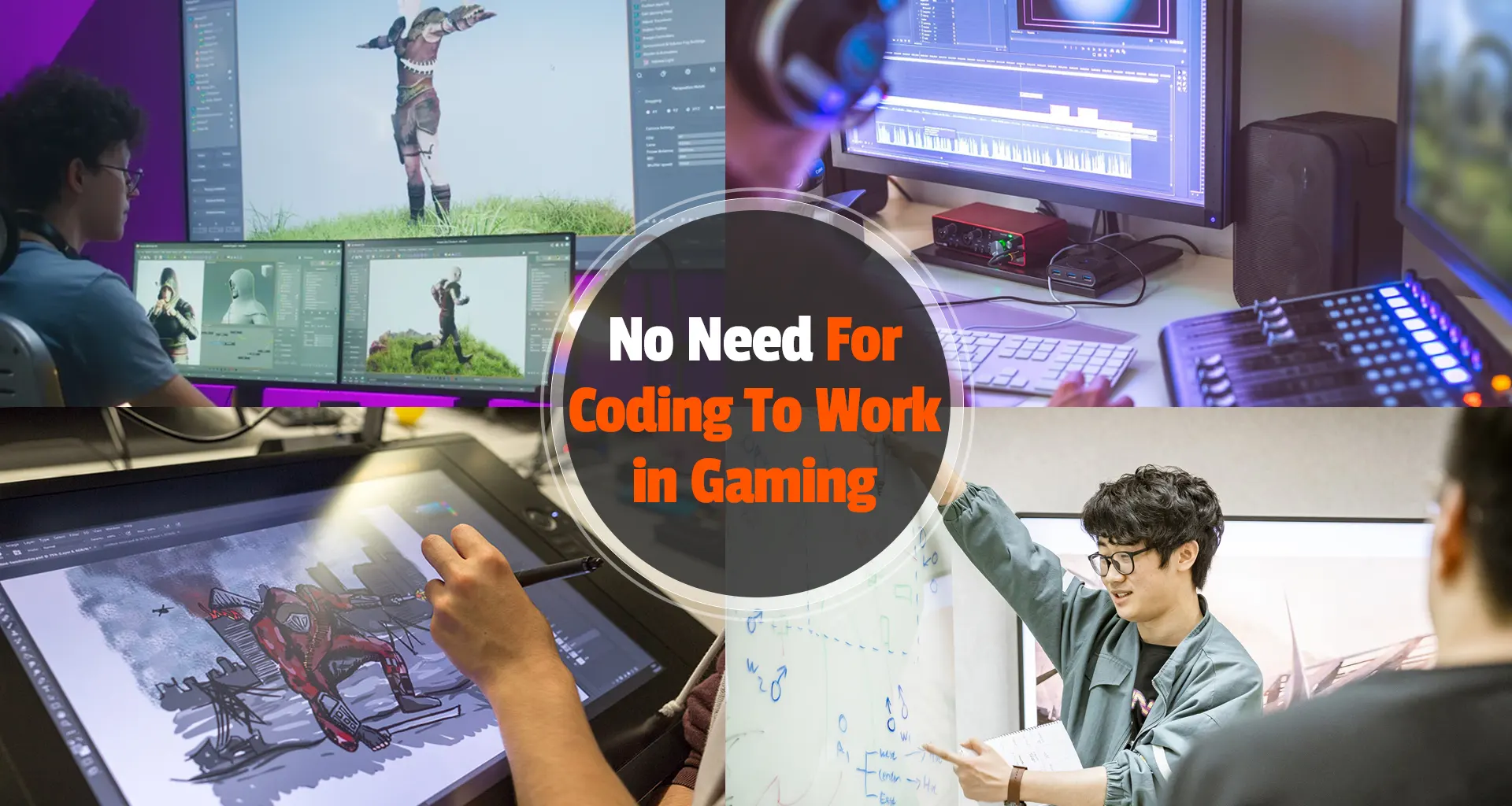

When most people hear “game industry,” they instantly think of coding. And yeah, programming is super important in making games, but here’s the thing: you don’t need to be a coder to have a career in gaming. Seriously. There are tons of roles in the industry that have nothing to do with writing lines of code—and they’re just as essential to getting a game made.
1. Art & Animation
Artists literally bring games to life. From character designs and environments to UI and visual effects, there’s so much that goes into the look and feel of a game. And within art, there are even more specializations—concept art, 3D modeling, rigging, VFX, and more.
If you love drawing, designing, or making cool visuals, you might be more of a game artist than a game coder.
2. Game Design
Game designers are the people who come up with the rules, systems, and mechanics that make a game fun. They figure out how levels work, how players interact with the game world, and how challenges are balanced.
While some designers do use scripting or logic tools (like Unreal Blueprints or Unity Visual Scripting), you don’t always need deep coding knowledge to be great at design. What matters more is creativity, problem-solving, and understanding what makes a game fun.
3. Writing & Narrative Design
Love storytelling? There’s space for that too. Writers and narrative designers create the world, characters, dialogue, and story arcs. They help shape the emotional core of the game and make players actually care about what they’re doing.
If you’re into creative writing, screenwriting, or even D & D storytelling, narrative design could be your entry point into the industry.
4. Audio Design & Music
Audio people are the unsung heroes of game dev. They craft everything from epic soundtracks to subtle footsteps and ambient sounds. Music and sound design massively affect how a game feels—just imagine playing a horror game with no sound. It wouldn’t hit the same at all.
You don’t need to code, but you do need an ear for sound and the skills to mix, edit, or compose.
5. Production & Project Management
Producers are basically the glue that holds game teams together. They schedule meetings, track deadlines, and keep everything moving. Think of them like the team’s captain—they don’t make the plays, but they make sure everyone’s on the same page and working toward the same goal.
If you’re super organized and love managing people and projects, this is a great non-coding role.
6. Marketing, Community, and QA
Even after a game is built, someone has to promote it, test it, and support it. That’s where marketing managers, community leads, content creators, and QA testers come in.
From running social media to talking with fans to making sure the game isn’t full of bugs—these roles are super important, and none of them require you to code.
The game industry is way bigger than just coding. Yes, programmers are a huge part of it, but artists, writers, designers, sound folks, producers, and marketers are just as important. So if you’re passionate about games but coding isn’t your thing, don’t count yourself out.
There’s a place for you in this world; you just have to find the right lane, and we at Game Insider World are here to help you find it.