
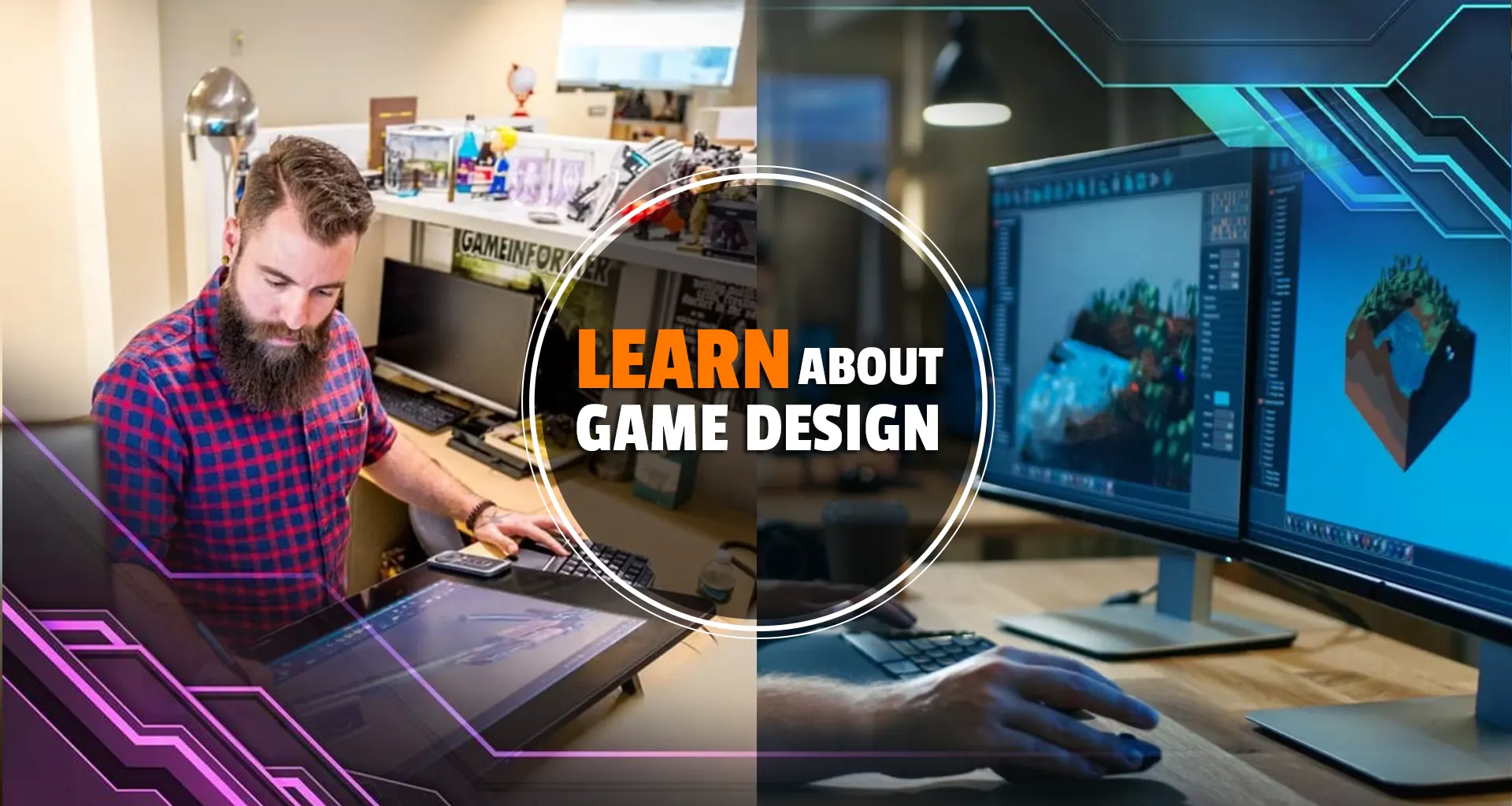

Game design is one of the most important parts of game development. It shapes how a game works, how players interact, and why the experience feels enjoyable, emotional, or memorable. From the thrill of beating a boss to the strategy behind a puzzle or the pacing of a story, every player moment is crafted through thoughtful design.
If you’re curious about making games or exploring a career in the gaming industry, understanding what game design is is the best place to start. This guide explains game design in simple terms, the responsibilities of game designers, different design roles, essential skills, examples, and a step-by-step roadmap for beginners.
What Is Game Design? (Definition)
Game design is the process of planning and creating gameplay mechanics, rules, systems, levels, challenges, story flow, and player interactions. It acts as the blueprint of a video game.
A game designer decides:
- how the game works
- how players progress
- how difficult the experience should be
- how the story unfolds
- how rewards are earned
- how challenges are structured
Good game design makes a game fun, fair, engaging, and memorable.
Why Game Design Matters
Even the most realistic graphics or advanced technology cannot make up for weak game design. The design determines how players feel while playing.
Good game design:
- keeps players engaged
- ensures balanced difficulty
- creates meaningful choices
- improves replay value
- builds emotional and memorable experiences
A well-designed game isn’t just played — it is experienced.
Game Design vs Game Development (Quick Comparison)
| Game Design | Game Development |
| Planning gameplay, rules, systems, levels | Building the actual game using code, art, audio |
| Focus on player experience | Focus on implementation |
| Designers create the blueprint | Developers turn the blueprint into a playable game |
| Involves creativity + psychology | Involves programming + technical skills |
Design asks “What should the player feel?”
Development answers “How do we build it?”
What Does a Game Designer Do?
Game designers are the architects of the gameplay experience. They combine creativity, logic, research, and player psychology.
1. Designing Core Mechanics
Movement, combat, platforming, shooting, crafting, puzzles—mechanics define how a game feels moment to moment.
2. Creating Systems and Rules
Designers structure:
- progression systems
- in-game economy
- crafting loops
- AI behavior
- reward structures
3. Planning Levels and Player Progression
They decide:
- how difficulty increases
- how missions flow
- where enemies appear
- how tutorials teach mechanics
4. Writing Documentation
Designers create:
- GDDs (Game Design Documents)
- feature documents
- level design sheets
These guide programmers, artists, animators, and QA.
5. Prototyping
Before building the full game, designers make small prototypes to test mechanics quickly.
6. Playtesting and Balancing
They observe players, fix issues, and adjust mechanics to improve the overall experience.
Types of Game Designers
Game design is a broad field with several specializations.
Gameplay Designer
Builds moment-to-moment gameplay—movement, abilities, weapons, feel of the controls.
Level Designer
Creates levels, missions, maps, puzzles, and exploration flow.
Systems Designer
Designs progression, crafting, AI, currencies, difficulty curves.
UI/UX Designer
Builds menus, HUDs, interfaces, and ensures the game is easy to navigate.
Narrative Designer
Creates story structure, character arcs, dialogue, and world lore.
Combat Designer
Designs enemy types, attacks, weapons, boss fights, and balancing.
Each specialty contributes to a polished, cohesive experience.
Key Skills Needed for Game Design
Game design blends creativity, analysis, and communication.
Gameplay Understanding
Knowing what makes a game fun, intuitive, and rewarding.
Problem-Solving
Balancing systems and fixing gameplay issues.
Basic Technical Knowledge
Understanding Unreal, Unity, or prototypes helps designers communicate with teams.
Communication & Collaboration
Designers work with programmers, artists, animators, and QA.
Creativity
Imagining mechanics, systems, and worlds.
Player Psychology
Understanding what motivates players and what keeps them engaged.
Examples of Game Design in Action
Every game you play is filled with design decisions. For example:
- XP systems – Dark Souls, World of Warcraft, and the Diablo series
- Quests and mission structure – The Witcher 3, Baldur’s Gate series, and Skyrim
- Unlockable abilities – Hollow Knight, Super Metroid, and God of War (2018)
- Enemy placement and boss patterns – Elden Ring, Doom (2016), Cuphead
- Dialogue choices – Fallout: New Vegas, The Wolf Among Us, and Dispatch (2025)
- Open world exploration – Grand Theft Auto (GTA) series, Red Dead Redemption 2, and The Legend of Zelda
- Puzzle difficulty progression – Portal series, The Talos Principle series, and Baba Is You and the Witness
Game design shapes these decisions.
Beginner Roadmap: How to Start Learning Game Design
You can start learning game design today—no expensive degree required.
1. Study Games Critically
Analyze games you play:
- Why is this level fun?
- How does difficulty increase?
- Why does this mechanic feel satisfying?
2. Make Small Prototypes
Use free tools like:
- Godot
- Unity (Free)
- Unreal Engine
- Paper prototyping
Start tiny.
Before creating prototypes, it helps to understand the strengths of different engines. Check out our breakdown on Unity vs Unreal and how to choose the right engine for your career.
3. Learn Game Design Basics
Focus on:
- level design
- systems design
- pacing
- gameplay loops
4. Join Game Jams
Events like GMTK Jam help you learn fast, work with others, and build a portfolio.
5. Build a Portfolio
Include:
- prototypes
- GDDs
- level maps
- system breakdowns
Studios hire based on portfolios, not degrees.
Is Game Design a Good Career in 2026?
Yes, game design is one of the fastest-growing careers in the global gaming industry. With the rise of mobile gaming, PC/console titles, cloud gaming, and VR, studios need designers who understand gameplay and players.
From indie studios to AAA companies, the demand for skilled designers continues to rise.
Game design is the foundation of every enjoyable game. It mixes creativity, psychology, logic, and teamwork to shape player experiences. If you dream of building games, becoming a game designer is the perfect way to turn your ideas into playable worlds. With practice, curiosity, and the right skills, anyone can begin their journey in game design.
If you want to explore more career opportunities beyond game design, check our full guide on game industry roles explained, covering artists, programmers, producers, and more.
Frequently Asked Questions (FAQ)
1. What is game design in simple words?
Game design is the process of planning how a game works—its mechanics, rules, systems, levels, and story.
2. Do game designers code?
Some do, but it’s not required. Basic engine knowledge is helpful.
3. Is game design hard?
It can be challenging, but beginners can start small and build skills gradually.
4. Do you need a degree for game design?
No. Studios care more about your portfolio than your degree.
5. Can game design be self-taught?
Yes, many professional designers learned through online tutorials, game jams, and practice.
Follow Game Insider for weekly tips on game development, esports, and careers in gaming. Also keep an eye on Game Insider World, for updates on our courses.
One Response