
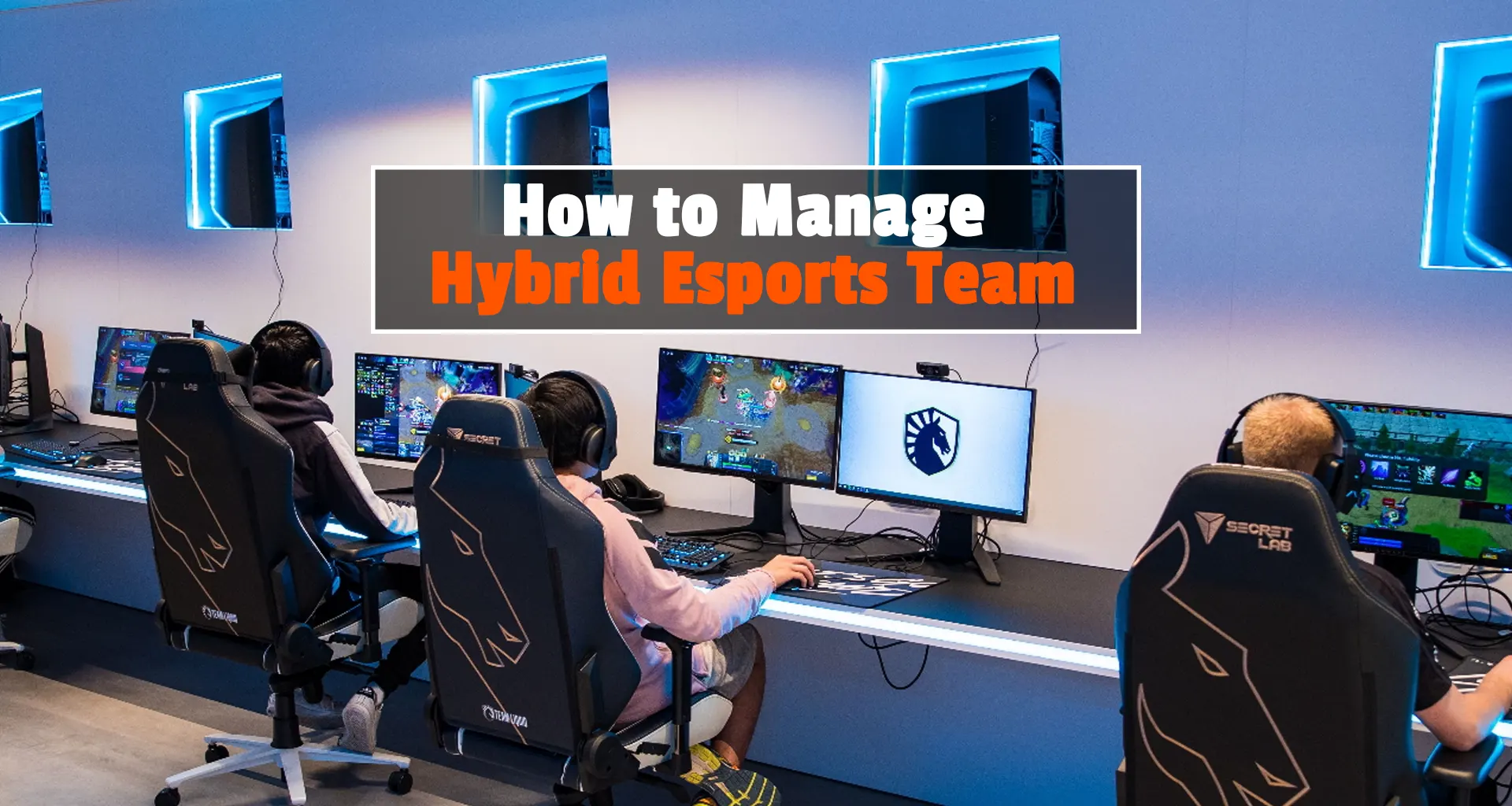

The esports industry has moved far beyond centralized gaming houses and single-city training facilities. Today, many professional teams operate with players, coaches, analysts, and managers spread across different cities or even continents. Remote and hybrid esports teams are no longer an experiment. They are becoming the default operating model.
In most esports contexts, a hybrid team setup refers to a bootcamp-based model. Players and staff practice remotely during the regular season, then come together in person for intensive boot camps before major tournaments. This structure allows organizations to access global talent while still preserving the benefits of face-to-face training at critical moments.
While this model offers flexibility and scalability, it also introduces challenges that traditional teams rarely face. Communication gaps, time zone conflicts, latency issues, and burnout can quickly impact performance if not managed correctly. Successful remote and hybrid teams rely on strong structure, intentional communication, and clear leadership.
Why Remote and Hybrid Models Are Growing in Esports
One of the biggest reasons for this shift is access to talent. Limiting recruitment to a single location restricts competitive potential, especially in a global industry like esports. Remote models allow organizations to sign the best players available, regardless of geography.
Cost efficiency also plays a role. Operating full-time gaming houses is expensive, and many organizations now prefer flexible setups supported by short-term bootcamps. Advances in online tournament infrastructure, practice servers, and remote coaching tools have made distributed teams more viable than ever.
That said, remote does not mean completely location-independent. At elite levels, latency still matters. Most professional teams ensure that players are at least in the same competitive region to maintain acceptable ping during scrims and online tournaments. Remote setups work best when players are geographically distributed but regionally aligned.
Tools and Infrastructure That Make Remote Teams Work
Remote esports teams live and die by their infrastructure. Communication platforms like Discord remain the backbone of daily operations, while project and task management tools such as Notion or Trello help teams track goals, schedules, and feedback.
For performance analysis, VODs (Video on Demand) are essential. Many teams rely on POV recordings rather than just replay files, since seeing a player’s screen focus, mouse movement, and decision-making in real time gives coaches deeper insight than spectator replays alone. Specialized VOD review tools and game-specific analytics platforms have become standard for serious teams.
Without a reliable tech stack, even the most talented roster will struggle to stay coordinated.
Clear Roles and Responsibilities Are Non-Negotiable
In remote environments, ambiguity creates friction. Every player and staff member must understand their role, responsibilities, and reporting structure. Players need clarity around practice expectations, individual training, VOD review sessions, and content obligations. Coaches and analysts require defined schedules for reviews and preparation. Managers oversee logistics, timelines, and conflict resolution.
When expectations are clearly documented and consistently reinforced, teams operate smoothly even without physical oversight.
Time Zones and Scheduling Realities
One of the most overlooked challenges in remote esports teams is time zone management. Working with global talent means synchronizing schedules across regions, which can quickly become a logistical nightmare.
Successful teams establish fixed practice windows that respect player health while still allowing overlap for scrims, reviews, and meetings. In some cases, this requires tough decisions about roster composition or role distribution. A coach in Europe and a player in North America can work together, but only with deliberate scheduling and realistic expectations.
Ignoring time zones leads to burnout, miscommunication, and declining performance.
Consistent Practice and Review Routines
Remote teams thrive on routine. Scrims should occur at consistent times, VOD reviews should follow a structured format, and feedback should be delivered regularly and constructively.
Coaches often rely on POV recordings to review mechanics, positioning, decision-making, and focus. This level of detail helps replicate the depth of feedback typically available during in-person sessions. Hybrid teams perform best when their online routines closely mirror the discipline and structure of bootcamp environments.
Trust, Accountability, and Performance Tracking
Remote work demands trust, but trust must coexist with accountability. Teams still need transparent systems to track attendance, preparation, performance trends, and behavioral standards.
This does not mean micromanagement. It means setting expectations clearly and addressing issues early through honest conversations. When accountability is handled professionally, trust within the team strengthens rather than erodes.
Burnout, Recovery, and Mental Health
Remote esports environments often blur the boundary between work and personal life. Players practice, stream, and consume content in the same space they live, which increases the risk of burnout.
High-performing organizations address this proactively. Mandatory recovery days, enforced downtime, and open conversations around mental health are becoming standard at the professional level. Teams that prioritize sustainable performance outperform those that rely on constant pressure.
Building Culture Without Physical Presence
Team culture does not form automatically in remote setups. It must be built intentionally through communication, shared rituals, and occasional in-person experiences.
Bootcamps play a crucial role beyond practice. They help establish trust, reinforce culture, and strengthen interpersonal bonds that carry over into remote play. Teams with a strong culture communicate better under pressure and adapt faster during competition.
Leadership Is the Defining Factor
Leadership matters more in remote and hybrid teams than in traditional setups. Coaches, managers, and team captains must provide clarity, direction, and emotional stability. Weak leadership magnifies every challenge that distance introduces.
Strong leadership creates alignment, confidence, and resilience. It turns a distributed roster into a unified team.
Remote and hybrid esports teams are not a temporary solution. They represent the future of competitive gaming. Organizations that invest in structure, infrastructure, communication, and player well-being will gain a clear competitive edge.
Even when players are separated by screens and cities, esports remains a team sport. Success still depends on trust, discipline, and shared purpose.
Want to kickstart your career in Esports? Check out our Esports and Streaming Starter Series on Game Insider.