
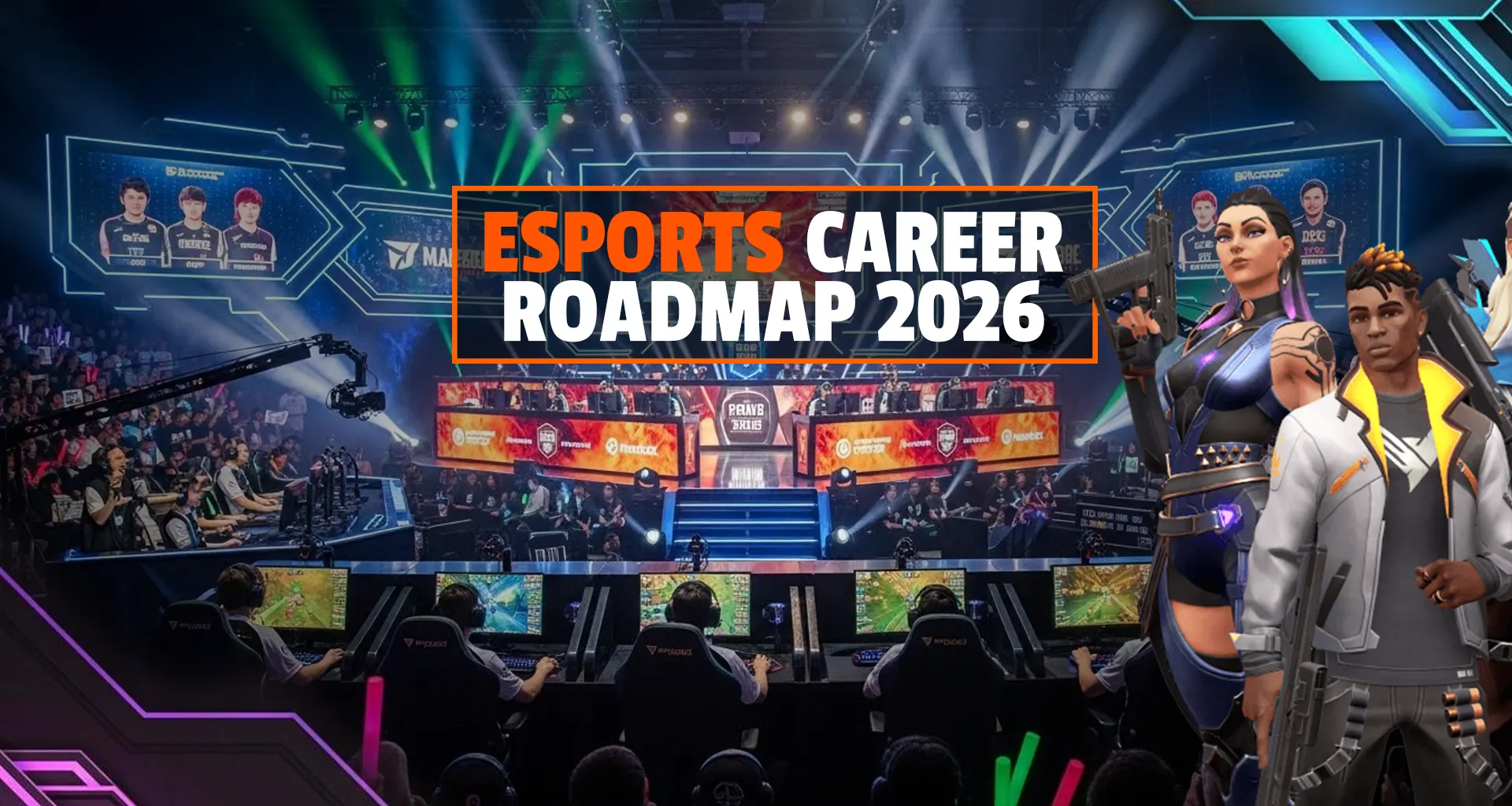

The esports industry in 2026 is no longer a “side hustle dream.” It is a structured, high-performance ecosystem combining competitive gaming, content creation, analytics, event production, marketing, and technology.
With global tournaments in titles like Valorant, League of Legends, Counter-Strike 2, Dota 2, and PUBG Mobile offering multi-million dollar prize pools, the opportunities are bigger than ever, but so is the competition.
If you’re serious about building a career in esports in 2026, you need a roadmap. Here’s a practical, realistic guide.
Choose Your Path Early
Esports is not just about becoming a pro player. In 2026, the ecosystem includes:
- Professional Player
- Content Creator / Streamer
- Coach or Analyst
- Tournament Organizer
- Broadcast Talent (Caster/Host)
- Esports Manager
- Performance & Data Analyst
- Social Media & Marketing Specialist
- Production & Observer Roles
The mistake many aspirants make is trying everything without mastering anything. Pick a primary direction by year one.
If You Want to Be a Pro Player
Step 1: Pick One Game
Commit to one competitive title. Track its esports ecosystem:
- Active tournaments
- Tier-2 scene
- Local LAN events
- Open qualifiers
Step 2: Structured Training
In 2026, random grinding doesn’t work. You need:
- 4–6 hours of focused practice
- Scrims with ranked or semi-pro teams
- VOD reviews
- Aim/mechanics training tools
- Physical fitness routine
Top teams now integrate sports psychology and performance coaching — just like traditional athletes.
Step 3: Build Visibility
- Participate in community tournaments
- Upload highlight clips
- Maintain an active X (Twitter) and Instagram
- Network with managers and tournament organizers
Esports careers are built on performance + visibility.
Content Creation Is a Parallel Opportunity
Even pro players diversify through streaming.
Platforms like:
- YouTube
- Twitch
- Kick
allow players to monetize personality, not just skill.
In 2026, successful creators focus on:
- Niche expertise (agent guides, patch breakdowns)
- Entertaining formats (challenge runs, ranked grind)
- Short-form clips for discoverability
Consistency beats virality.
Coaching and Analysis: The Underrated Goldmine
With AI-powered analytics tools entering esports, teams now rely heavily on:
- Data tracking
- Opponent strategy breakdown
- Performance heatmaps
- Draft analysis
If you understand macro gameplay deeply, coaching is a viable career path. Many former Tier-2 players transition successfully into analyst roles.
Skills required:
- Communication clarity
- Strategic thinking
- Video breakdown tools
- Basic data literacy
Education Still Matters
In 2026, esports organizations prefer structured talent.
Relevant fields:
- Sports Management
- Data Analytics
- Media & Broadcasting
- Marketing
- Game Design
You don’t necessarily need a degree in esports, but you need skills that add business value.
The Business Side of Esports
Esports is now a brand-driven industry.
Revenue streams include:
- Sponsorships
- Media rights
- In-game partnerships
- Merchandising
- Tournament hosting
Understanding contracts, brand deals, and digital marketing is crucial. Many promising careers fail because players ignore financial literacy.
Learn:
- Basic contract terms
- Taxation for freelancers
- Personal branding
- Audience monetization
Mental & Physical Sustainability
Burnout is the biggest career killer in esports.
To survive beyond 2–3 years:
- Maintain sleep discipline
- Exercise regularly
- Manage screen time
- Avoid toxic online environments
- Develop identity outside gaming
The 2026 esports athlete is closer to a hybrid between gamer and professional sports competitor.
The India & Asia Opportunity
For emerging markets like India and Southeast Asia:
- Mobile esports continues to dominate.
- Grassroots tournaments are increasing.
- Regional leagues are gaining sponsors.
Players who establish themselves early in local circuits have a higher chance of scaling internationally.
3-Year Roadmap Plan (2026–2029)
Year 1:
Skill building + online tournaments + social media presence
Year 2:
Join semi-pro team / build 5–10k audience / attend LAN events
Year 3:
Secure organization contract / consistent income stream
If by Year 3 you are not scaling competitively, pivot into coaching, content, or management rather than quitting entirely. Note that a strong social media strategy in Year 1 can often accelerate your Year 2 growth, hitting that 5–10k audience milestone much earlier than expected.
Checkout Game Insider Esports & Streaming Fundamentals Course to dive more deeply into the world of esports.