
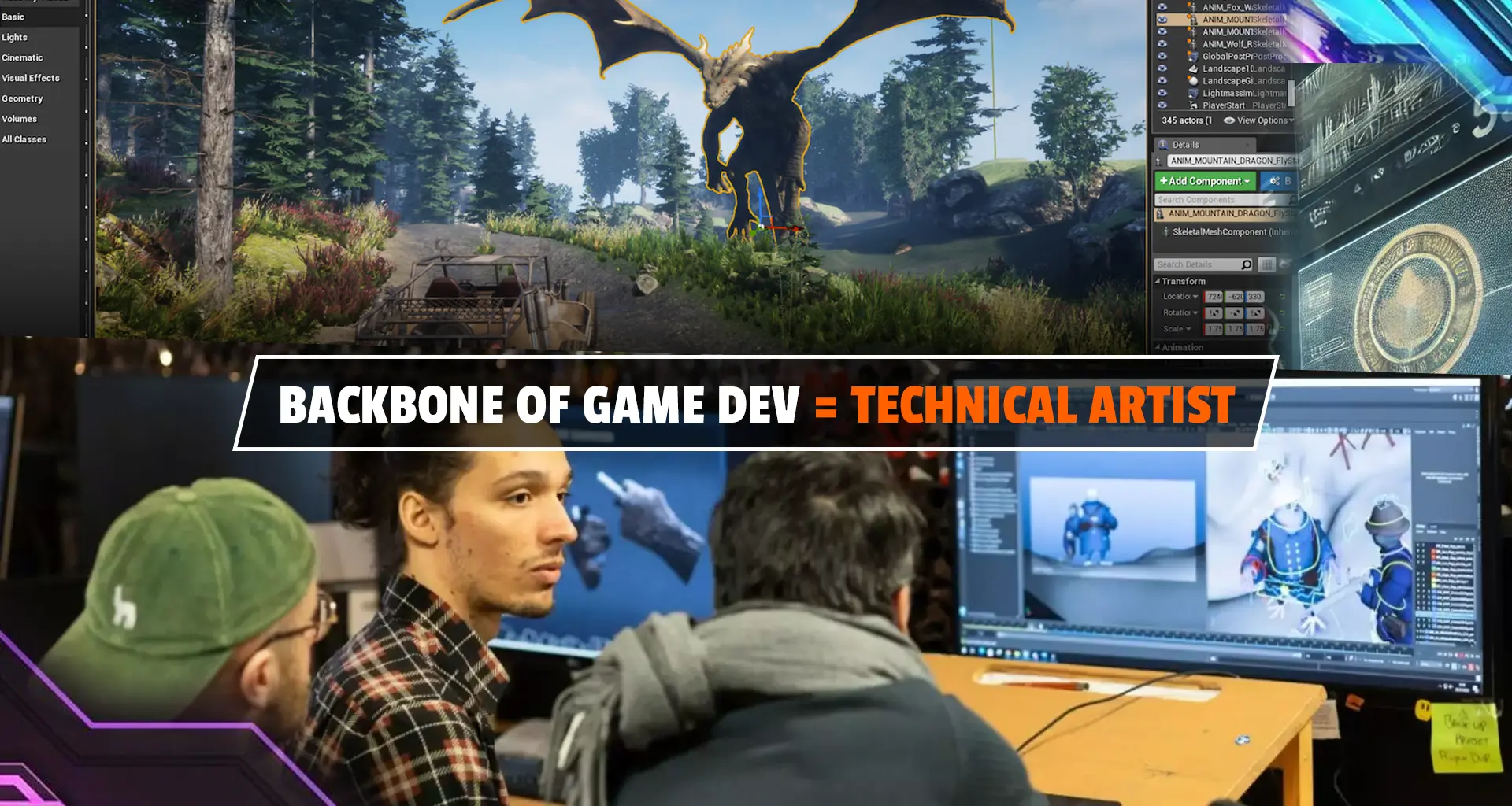

Game development is a collaborative process where artists, designers, and programmers work together to create immersive worlds. However, these disciplines often operate with very different workflows and priorities. This is where the technical artist becomes essential.
Technical artists act as the bridge between the creative and technical sides of game development. While artists focus on creating models, textures, animations, and visual effects, programmers focus on building systems and gameplay mechanics.
A technical artist understands both perspectives and helps ensure that artistic ideas can be implemented efficiently within the technical limits of the game.
Why This Role Is Becoming More Important
As modern games become more visually advanced, the complexity of development pipelines has increased significantly. Game engines now support advanced lighting systems, complex shaders, procedural tools, and real-time visual effects. While these technologies open new creative possibilities, they also introduce technical challenges.
Technical artists help studios navigate this complexity. They build tools, improve workflows, and make sure visual features work properly without harming performance. Because of this, many studios now consider technical artists to be one of the most valuable members of the development team.
Making Production Faster and More Efficient
One of the biggest contributions of technical artists is pipeline optimization. In game development, artists often repeat tasks such as importing assets, adjusting materials, preparing models, or creating multiple versions of assets for different performance levels.
A technical artist can create scripts, tools, or automated workflows that reduce repetitive work. For example, they might build systems that automatically generate Level of Detail (LOD) models, optimize textures, or speed up asset integration in the engine. These improvements can save teams many hours during development and allow artists to focus more on creativity.
Ensuring Games Run Smoothly
Visual quality is important, but performance is equally critical. A game filled with high-quality assets can still fail if it runs poorly on players’ devices.
Technical artists specialize in optimizing visual systems such as lighting, shaders, particle effects, and materials. By understanding how these systems affect memory usage and frame rates, they help maintain a balance between visual fidelity and performance.
This is especially important when working with modern engines like Unity and Unreal Engine, where powerful graphical features must be used carefully to avoid performance issues.
A Great Career Path for Hybrid Creators
For students and aspiring developers who enjoy both art and technology, technical art can be an exciting career path. Unlike traditional roles that focus only on programming or only on art, technical artists combine creativity with problem-solving.
They might work on shader creation, rigging systems, visual effects, or tools that help artists work more efficiently. This mix of disciplines makes the role both challenging and highly rewarding.
A Key Role in Modern Game Development
As game development continues to evolve, studios increasingly need people who can understand both creative vision and technical implementation. Technical artists fill this gap by improving pipelines, solving production challenges, and helping teams deliver visually impressive games without sacrificing performance.
For anyone interested in game development, understanding the role of technical artists reveals how much behind-the-scenes work goes into bringing digital worlds to life. In many ways, they are the hidden force that helps turn artistic ideas into playable experiences.
What It Takes to Become a Technical Artist
Because technical artists sit at the intersection of two very different disciplines, stepping into this role requires a unique blend of skills. While the exact requirements can vary depending on the studio and the specific project, a successful technical artist generally needs a mix of the following:
- A Strong Foundation in Art: TAs do not always create the final assets, but they must understand the artistic process. Knowing the fundamentals of 3D modeling, texturing, rigging, and animation, often using software like Blender, Maya, or ZBrush, is crucial for understanding the challenges traditional artists face.
- Programming and Scripting Skills: To build tools and automate workflows, technical artists need to write code. Python is the industry standard for scripting in 3D software, while knowledge of C# or C++ is highly valuable for working inside game engines like Unity or Unreal.
- Understanding of Game Engines and Rendering: A deep knowledge of how game engines process graphics is essential. This includes understanding shaders (often written in HLSL or visual node graphs), lighting models, and the math behind how 3D objects are rendered on a screen.
- Exceptional Communication and Problem-Solving: Perhaps the most important skill is the ability to translate technical limitations to artists and creative goals to programmers. A great TA is a natural problem-solver who can listen to a team’s frustrations and invent a tool or workflow to fix them.
Keep following Game Insider for more such informative articles.