
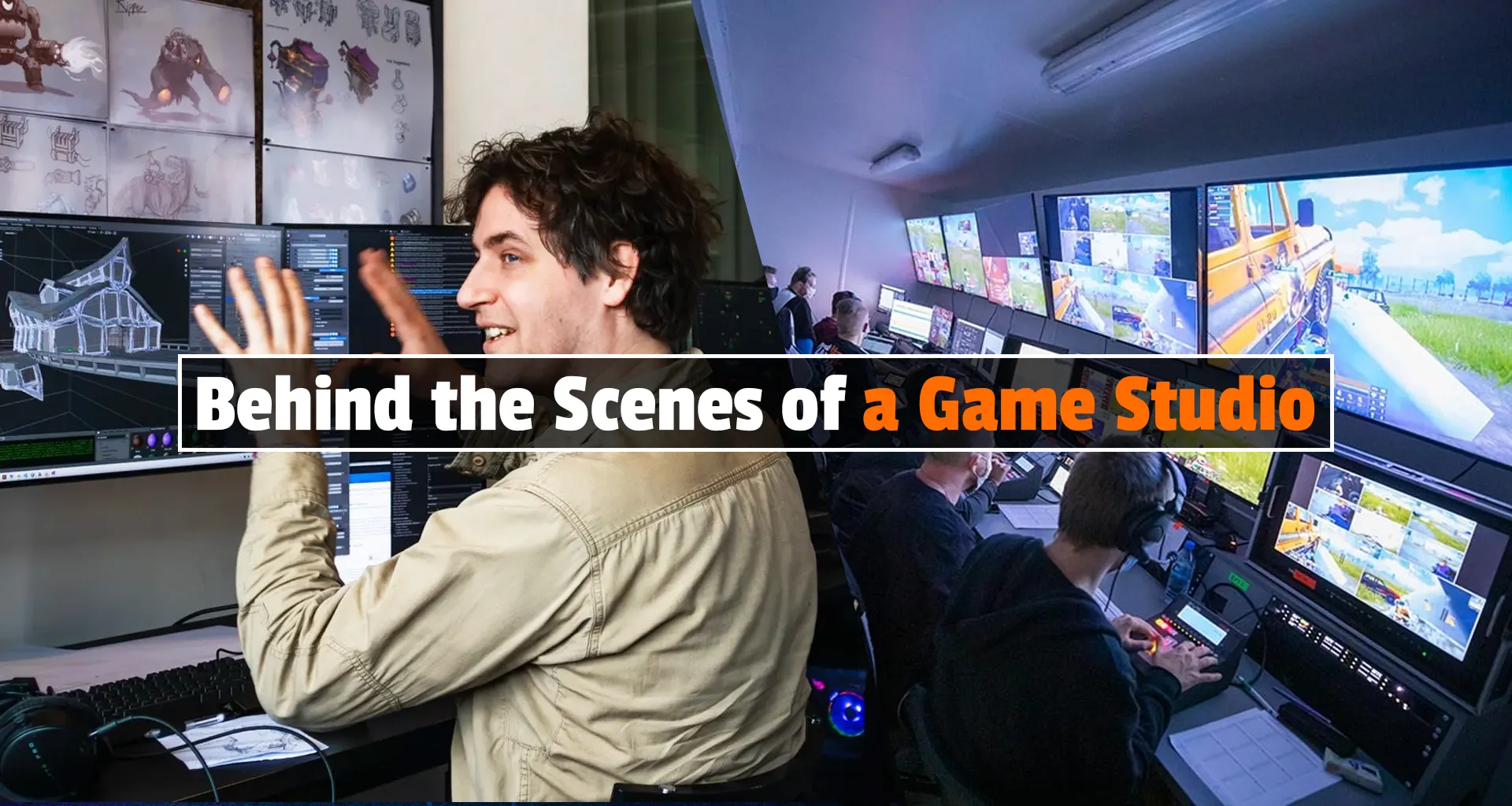

When you play a game, you only experience the polished surface, the smooth controls, the beautiful world, the characters that respond instantly to your actions. What you don’t see is the enormous network of people behind it, working for months or sometimes years to bring that single moment of gameplay to life. Game development is a deeply collaborative craft, built on hundreds of decisions, dozens of disciplines, and a level of coordination that most beginners never imagine.
After spending more than a decade working across studios like Ubisoft, YouZu, Jetsynthesys and Garena, there’s one thing I wish every newcomer truly understood: games are not made by individuals; they are made by ecosystems. When you step into a studio, you step into a world where creativity and structure coexist, where art meets engineering, and where ideas only become reality because different people specialise in different parts of the journey.
So, Who Actually Builds a Game?
Most beginners think of a “game designer” as someone who draws the characters or writes the code. In reality, designers spend their time shaping how the player should feel: the pacing of a level, the difficulty of an encounter, the way systems reward you, or how a new mechanic is introduced. Their decisions set the tone for everything else, long before a single line of code or pixel is created.
From there, the art and animation teams take over. This is where the imagination becomes visible. Concept artists sketch the earliest vision of the world; 3D artists build the characters, props, and environments; animators give them movement and personality. Without them, games would have no identity, no flavour, and no emotional pull. But even the most beautiful asset is just a picture until programmers bring it to life.
Programming inside a studio is far more complex than beginners assume. There are engineers who work on the moment-to-moment gameplay, how a gun fires, how a football curves, how a character jumps — and engineers who build everything behind the scenes, like servers, matchmaking, optimization, and systems that allow the game to run smoothly across devices and internet conditions. A game can have stunning art and brilliant design, but without stable engineering, it simply won’t survive.
One department that rarely gets the recognition it deserves is audio. Most players don’t consciously think about sound, but they feel it. Every footstep, every ambient cue, every music transition, every emotional moment is shaped by sound designers, voice directors, composers, and engineers whose job is to make the world feel alive. The difference between an “okay” game and an unforgettable one is often the quality of its audio.
And then, just when everyone thinks the game is ready, the most patient and meticulous team steps in — the Quality Assurance (QA) team. They test every mechanic, every corner of every level, every menu, every interaction. They find what players will never see. They protect the experience. Without them, no game would ever launch in the condition players expect.
What surprises most beginners is that something as simple as opening a door in a game can involve designers, artists, programmers, animators, audio, and QA. Multiply that by thousands of interactions, and you start to understand why communication is the real glue inside a studio. Teams must update each other constantly, accept feedback, and adjust their work based on the needs of others. Creativity alone doesn’t ship a game. Collaboration does.
Pipelines and Processes Hold a Studio Together
The other thing beginners rarely think about is pipelines and tools. Professional studios don’t just create — they follow systems. Version control, naming conventions, file organisation, task tracking, build processes, review cycles… these may sound boring, but they’re what keep a large project from collapsing under its own weight. Understanding pipelines is what separates hobby projects from professional game development.
If you’re dreaming of entering the industry, this is the reality you’re stepping into. It’s thrilling, challenging, chaotic, structured, and incredibly rewarding. But it works only because every discipline respects the others, and every specialist understands how their work connects to the bigger picture.
Games are living worlds built by real people. And the earlier beginners understand how those worlds come together — not through solo genius, but through shared vision and disciplined teamwork — the faster they grow into the kind of talent studios are looking for.
Keep following Game Insider Blog to learn more from the experts.