

India’s esports scene has grown rapidly over the past few years, and one game that played a major role in that growth is Free Fire. Developed by Garena, Free Fire quickly became one of the most popular mobile battle royale games in the country.
Its success in India was not only measured by downloads or playtime, but by how effectively Garena built a competitive esports ecosystem around it. At the same time, this growth also came with setbacks and long-term challenges that shaped the future of Free Fire esports in India.
The Rise of Free Fire in India
Free Fire gained popularity in India largely because of its accessibility. The game was optimized to run smoothly on low-end smartphones, making it playable for a massive audience. Short match durations, simple controls, and frequent updates made it ideal for both casual and competitive players.
As the player base grew, Free Fire consistently ranked among the most downloaded mobile games in India. This popularity created the foundation for a competitive ecosystem, but Garena India went a step further by actively investing in esports infrastructure rather than relying only on organic growth.
Building a Structured Esports Ecosystem
Garena India introduced a clear competitive structure with tournaments such as the Free Fire India Championship (FFIC) and the Free Fire India Series (FFIS). These events provided a consistent pathway from amateur to professional play. Open qualifiers allowed grassroots teams to compete, while national-level events offered significant prize pools and visibility.
Partnerships with tournament organizers, sponsors, and streaming platforms helped professionalize the ecosystem. Matches were broadcast regularly, production quality improved, and esports began reaching audiences beyond core gamers. This structure gave aspiring players a realistic goal and helped Free Fire esports feel like a legitimate career path.
Community and Creator-Driven Growth
A major strength of Free Fire esports in India was its strong creator ecosystem. Streamers and content creators played a crucial role in popularizing competitive play. Livestreams, highlight videos, tutorials, and community tournaments kept audiences engaged even outside official events.
Garena India supported this ecosystem through in-game events, creator programs, and community activations. As a result, Free Fire esports became deeply connected to its audience, driven not only by tournaments but also by personalities and fan engagement.
Negative Impact and Key Challenges
Despite its success, Free Fire esports in India faced significant challenges that affected players, teams, and the broader ecosystem.
The most impactful setback was the government ban on Free Fire in India in 2022. This decision abruptly halted official tournaments, cut off income sources for professional players, and disrupted careers overnight. Many teams that relied entirely on Free Fire were forced to disband or switch games, often without a clear transition plan.
Another concern was the over-dependence on a single title. Since many players, creators, and organizations focused only on Free Fire, the ban exposed how fragile the ecosystem had become. Unlike PC esports scenes, where skills often transfer across titles, mobile esports players had limited alternatives at the same scale.
There were also concerns around player burnout and age demographics. A large portion of the Free Fire competitive scene consisted of very young players. Without strong guidance, contracts, or long-term career planning, many players struggled once the ecosystem slowed down.
Additionally, the mobile esports ecosystem faced criticism for limited international exposure compared to PC and console esports. While Indian Free Fire teams performed well domestically, fewer opportunities existed for sustained global competition before the ban.
Free Fire Esports Comeback in India
Although Free Fire was banned, its enhanced version, Free Fire MAX, remained active. The primary difference between Free Fire and Free Fire MAX was graphical improvements. Free Fire MAX was positioned as a PUBG and BGMI alternative, but most of Free Fire’s audience used low- to mid-range smartphones.
This made it difficult for some users to transition to Free Fire MAX, resulting in a temporary drop in active players. Garena recognized this issue and introduced multiple graphical settings that allowed players to experience gameplay closer to the original Free Fire. Despite these challenges and ongoing rumors surrounding Free Fire India, the game managed to stay afloat.
The year 2025 became a landmark moment for fans, as Free Fire esports officially returned to India after a hiatus of nearly three and a half years, continuing under the banner of Free Fire MAX Esports India.
The first major esports series after the break was the Skyesports Pro League 2025. While initial viewership was modest, interest quickly surged. The Grand Final stream reached an impressive 516,000 concurrent views.
Indian audiences also showed massive interest in global events. The Hindi-language stream of the Free Fire Esports World Cup 2025 Grand Final recorded a staggering 897,000 views, highlighting the continued passion of Indian fans for Free Fire esports.
Garena India followed this momentum with the Free Fire MAX India Championship (FFMIC) 2025, an esports tournament that allowed players from across India to participate through in-game qualifiers. Many aspiring players, including my friends and I, took part, but the competition was intense, reflecting how hungry the community was for a return to top-level esports.
These numbers represent only part of the picture. Recent Free Fire MAX esports tournaments consistently crossed 1.1 million views on the official Free Fire Esports India YouTube channel, clearly demonstrating the game’s enduring popularity and the seriousness of India’s competitive player base.
Ironically, this comeback happened without spoon-feeding the audience. I still remember how, around 2021, Free Fire India would offer free in-game items if livestreams reached certain viewer milestones.
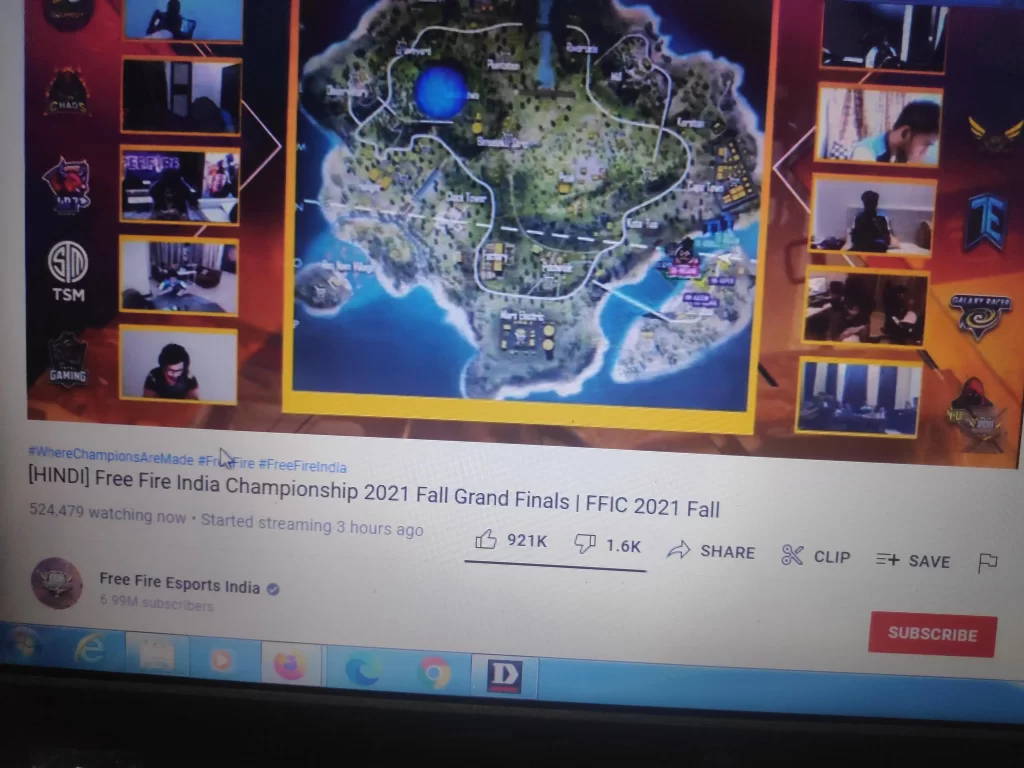
Context: Screenshot from a now-deleted 2021 Free Fire India livestream where in-game items were offered to boost live viewership.
From that phase to where it stands today is a remarkable shift. It shows how a change in audience mindset, combined with a clear long-term vision from the game studio, can completely reshape a game’s reputation.
Free Fire, once dismissed as a “kids’ game,” is now hosting esports tournaments with prize pools reaching ₹1 crore. For me, that transformation alone makes this one of the most impressive comebacks in Indian esports.