
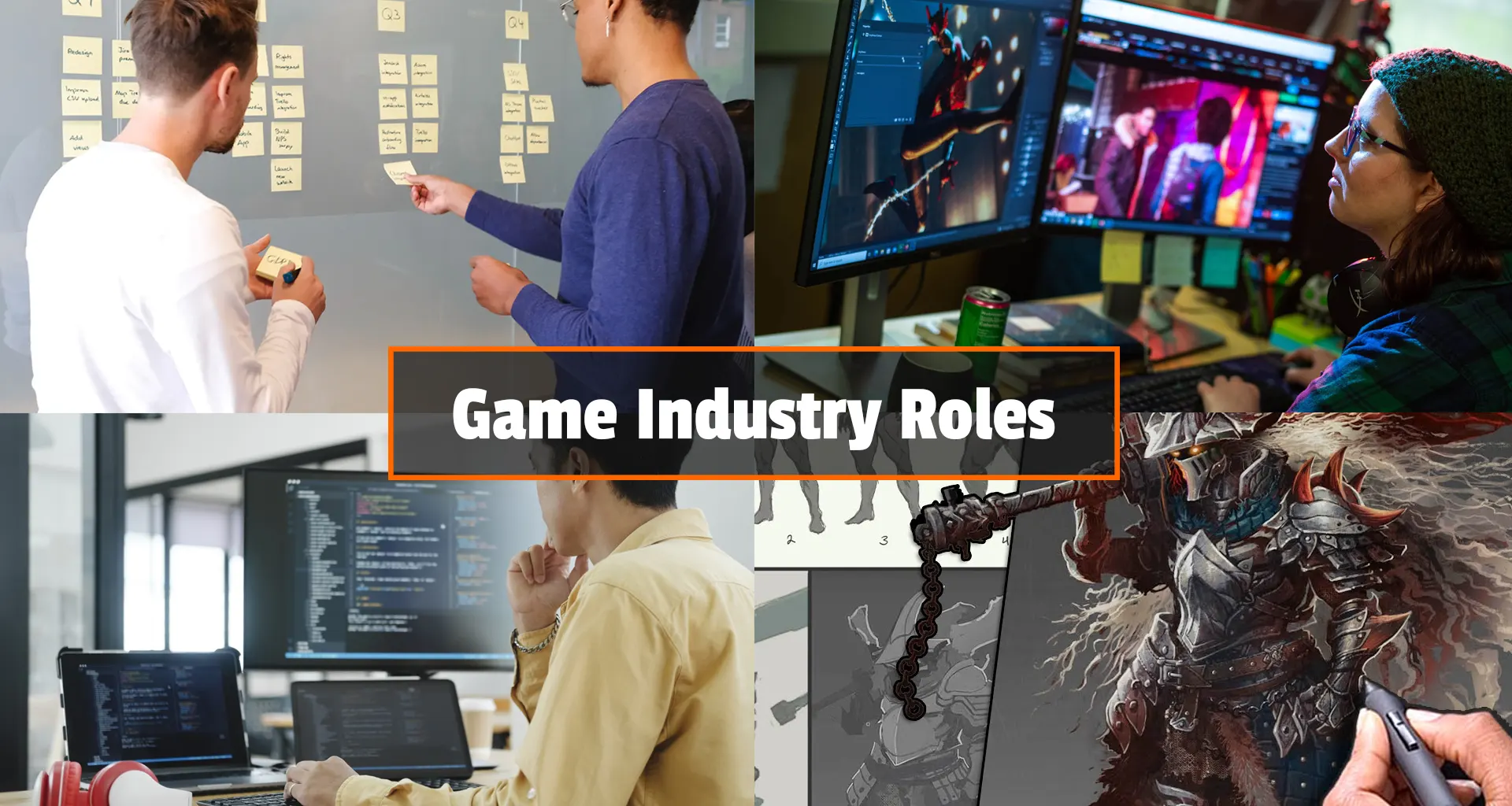

Building a modern video game requires a highly specialized team, with each role playing a critical part in turning a creative vision into a playable reality.
From managing budgets and schedules to designing core mechanics and hunting down bugs, the Game Producer, Designer, Programmer, Artist, and QA Tester are the five pillars that support every successful game studio. Understanding who does what is the first step in appreciating the complex dance of game development.
Game Producer
Game Producers are one of the most important people in a game studio. Producers are like the backbone of game development; they manage schedules, budgets, teams, and project goals to keep development on track. They are the intermediary between the studio and publishers, prioritizing tasks, troubleshooting workflow issues or conflicts, and maintaining a broader vision for the project’s delivery.
Producers are important because they assure the delivery of quality products. If they miss something, the whole game development ecosystem could go haywire and cost the studio dearly. While producers are not expected to code features themselves, basic technical literacy helps them communicate effectively with programmers and solve production bottlenecks.
Game Designer
Game Designers are the creative force behind a game’s core mechanics, systems, and overall vision. They design gameplay loops, rules, challenges, and experiences that make the game fun and engaging. Their tasks often involve prototyping, documenting ideas, and collaborating with other team members to bring concepts to life.
Designers work extensively with writers and artists to build compelling, larger-than-life worlds and stories.
Game Programmer (Developer)
Programmers transform designers’ ideas into fully functional games, solving technical challenges, optimizing performance, and ensuring the game runs smoothly across platforms.
Programmers typically fall into several specializations, such as:
- Gameplay/Frontend Programmers: These focus on implementing the core game features, mechanics, and user interface (UI) that the player directly interacts with.
- Engine/Backend/Tools Programmers: These focus on the underlying technology, like the game engine, networking, or optimizing performance to ensure the game runs efficiently across a range of low- to high-end devices and different platforms, ensuring playability even on minimum-required specifications.
Game Artist
A Game Artist defines the visuals, look, and feel of the game, whether it’s through character designs, backgrounds, effects, or animations. Artists include 2D/3D specialists, concept artists, and animators who collaborate to visually realize characters and worlds.
Quality Assurance (QA) Tester
Quality Assurance (QA) Testers are essential for maintaining gameplay integrity. They playtest the game across all development phases, searching for bugs, balance issues, and usability problems. They document all errors, suggest improvements, and confirm that features work as intended before release.
Keep following Game Insider World to learn more about the game industry roles.