

The success of a game today isn’t just about how well it’s built; it’s about how well it’s marketed. In an increasingly crowded industry, visibility, timing, and strategy can make or break a launch.
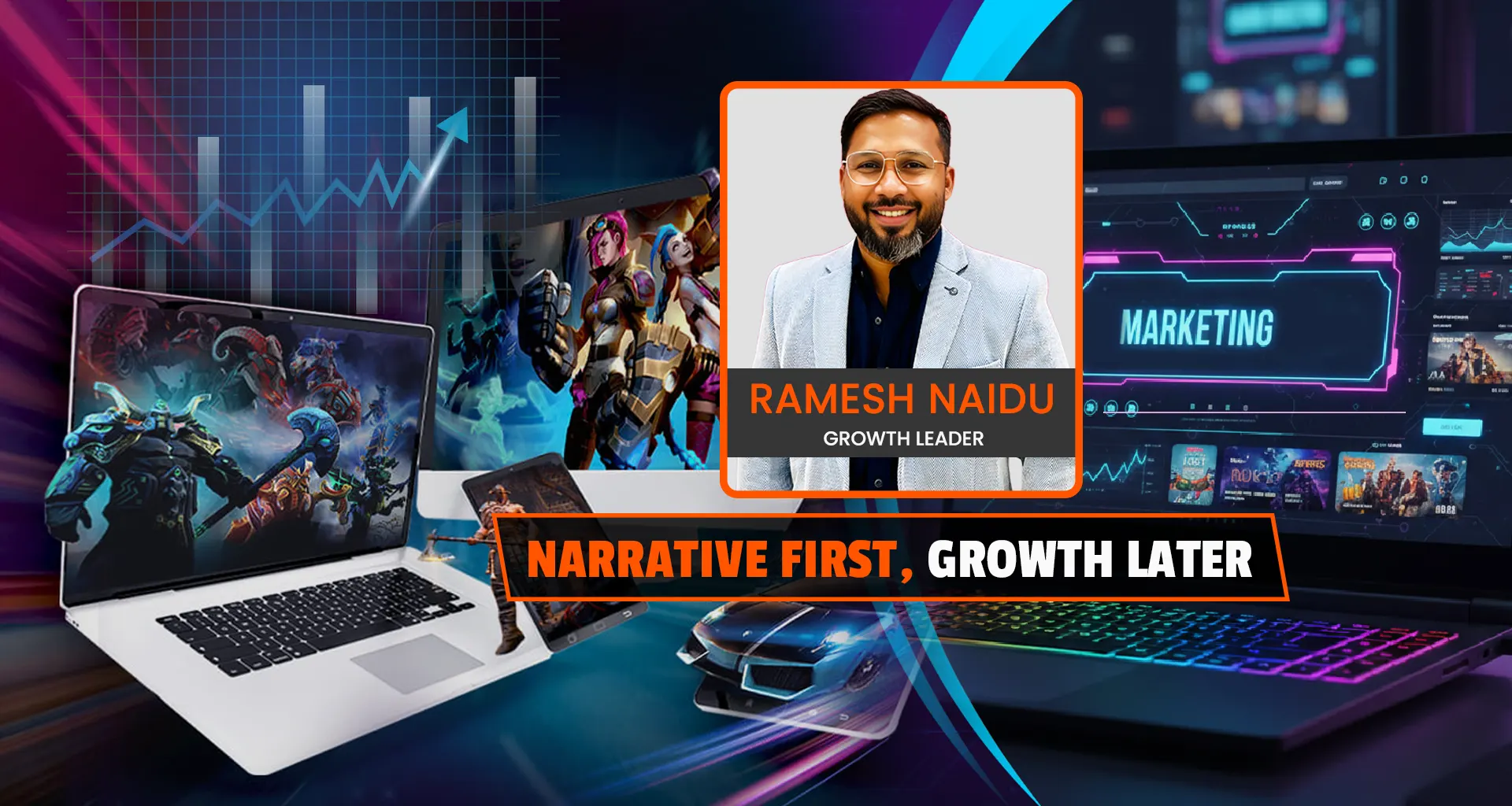
We spoke with Ramesh Naidu Pediredla, a games marketing expert with over a decade of experience, to understand what developers often get wrong and what actually works.
From narrative building to user acquisition, he shares practical insights on how modern game marketing really drives success.
What is the biggest mistake game developers make when marketing their game, and how can they avoid it?
Many gaming studios rely heavily on Performance UA for growth.
That’s a mistake.
Performance UA is important, but it’s not growth. Its distribution.
What most studios ignore is narrative building.
And the biggest miss?
It should start before the game is even ready.
When you build a narrative early:
• You create curiosity
• You gather real user feedback
• You validate ideas without burning budgets
• You build a community before launch
By the time you switch on UA, you’re not starting from zero.
You’re amplifying something that already exists.
The real balance is simple:
Narrative creates demand.
UA captures demand.
Skip the first, and you’ll always be paying to stay relevant.
How can indie game developers market their game effectively with a limited budget?
With limited budgets, the goal is simple:
Maximum outcome with minimum waste.
And that only happens when you have control over the channels you use.
Most indie developers make the mistake of jumping into performance UA too early.
But post-ATT, performance marketing is no longer predictable.
The systems need time.
They need data.
And more importantly, they need money to mature.
Unless you’re building a hyper casual or casual game, this can become a very expensive learning curve.
A smarter approach?
Work with gaming influencers.
They give you:
• Faster feedback
• Native content that doesn’t feel like ads
• Immediate access to engaged audiences
Instead of buying attention,
You’re leveraging attention that already exists.
Use this phase to:
Understand what works.
Refine your messaging.
Validate your game.
And only then,
bring in performance UA to scale.
Because today, performance marketing is not where you start.
It’s where you amplify.
What are the most effective user acquisition strategies for mobile games today?
There isn’t just one anymore.
User Acquisition today is no longer about media buying.
It’s about building a system.
Post-ATT, the rules have changed:
• Tracking is weaker
• Platforms optimise slower
• Creatives fatigue faster
Which means targeting is no longer your advantage.
Creative is.
The most effective UA strategies today:
• Creative-led testing at scale
• Influencer and UGC-driven distribution
• Blending organic signals with paid amplification
• Building communities that drive retention and growth
• Platform-native content instead of copy-paste ads
The biggest shift?
You don’t start with scale.
You start with a signal.
Find what works best.
Validate your hooks.
Understand your audience.
And then scale what’s already proven.
Because today, UA is not about buying users.
It’s about finding the right channel first and then amplifying it.
At what stage of development should game marketing begin?
It should begin the moment your idea is worth sharing.
Most studios treat marketing as the final step:
Build → Polish → Launch → Market
But by then, you’re already late.
You’re forced to guess:
Who your audience is
What messaging works
What will actually convert
A better approach?
Start early.
Test your idea.
Share your progress.
Build in public.
Let players react, critique, and shape your game.
By the time you launch,
you’re not starting from zero.
You’re scaling something that already has a signal.
Because marketing is not a phase.
It’s a parallel track to development.
What separates successful games from the thousands of games that fail to gain traction?
One word: Marketing.
Marketing separates successful games from the thousands that fail to gain traction.
But here’s the catch.
Organic is not dead. It has evolved.
It’s no longer about discovery through stores.
It’s about earning attention through content, creators, and community.
Yes, paid UA drives initial traction.
It gives you speed.
It gives you scale.
But it doesn’t guarantee success.
Because installs don’t build games.
Retention does.
Most successful games today do have massive marketing budgets.
That gives them a clear advantage in distribution.
But budget alone doesn’t build longevity.
If you don’t have millions to spend,
You can’t rely on brute force.
You need:
A strong, clear idea with a viral hook
Solid early retention
A game people genuinely want to play and share
Because in today’s market, you don’t win by just buying attention.
You win by earning it and then amplifying it.
About the Mentor
Ramesh Naidu Pediredla is a GI Mentor, a seasoned AI-driven growth leader, and the Co-founder of Game Sculptors, with over 14 years of experience scaling mobile gaming platforms across global markets. Known for his ability to blend creative strategy with rigorous data infrastructure, Ramesh has played a pivotal role in the success of over 50 Free-to-Play games and 20+ apps, including category-leading titles like Ludo King.
Keep following Game Insider Blog for more such expert-driven articles.