
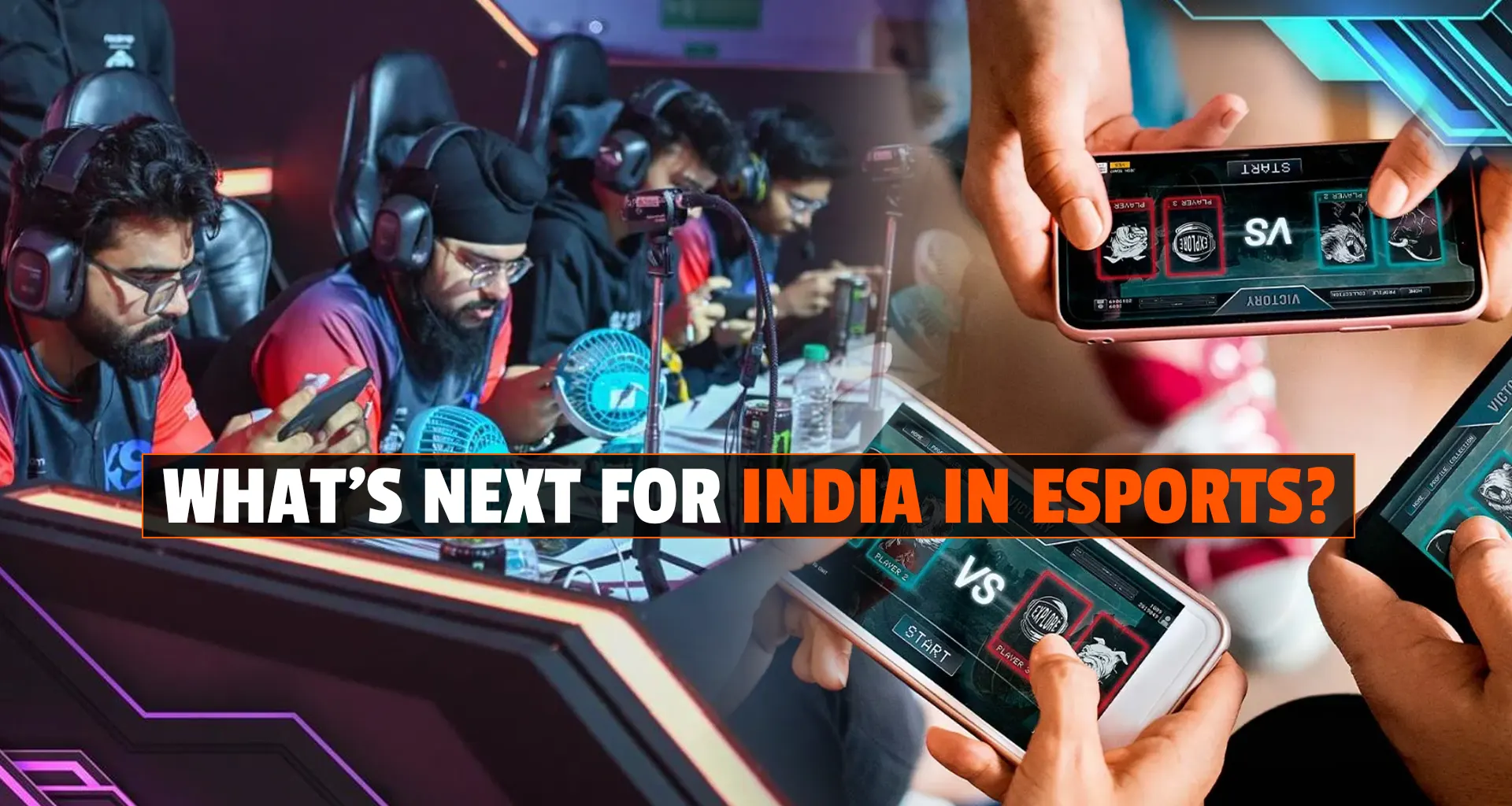

In most parts of the world, esports began on PCs and consoles.
South Korea built its esports dominance on StarCraft and PC cafés, while the United States developed competitive gaming through console and PC ecosystems.
India’s journey was very different.
Instead of high-end gaming hardware, the country’s esports boom was powered by affordable smartphones and cheap mobile data. What started as casual mobile gaming quickly evolved into a competitive ecosystem, one that would place India among the largest esports audiences in the world.
At the center of this transformation was PlayerUnknown’s Battlegrounds (PUBG), later relaunched as Battlegrounds Mobile India (BGMI), a game that turned mobile gaming into a serious competitive platform.
But as the ecosystem matures, a critical question emerges:
What comes next for Indian esports?
Will the industry remain mobile-first, or is India ready to expand into a more diversified global esports ecosystem?
How Mobile Gaming Built India’s Esports Ecosystem
India’s esports growth is closely tied to the country’s digital accessibility revolution.
Affordable smartphones and ultra-low internet costs, largely driven by the telecom disruption led by Reliance Jio, brought hundreds of millions of Indians online.
According to a report by the Internet and Mobile Association of India (IAMAI) and Kantar, India had 958 million internet users in 2025, with the majority accessing the internet through mobile devices.
This mobile-first digital behavior directly fueled gaming adoption.
India now has around 590 million gamers, according to Fortune India, making it one of the largest gaming audiences globally, second only to China.
However, digital habits are beginning to shift. Multi-device internet usage has reached 193 million users, suggesting that Indians are gradually expanding beyond mobile-only access to PCs, laptops, and other connected devices.
Despite this massive player base, India still contributes less than 2% to the $200 billion global gaming market, while countries like the United States and China contribute nearly 25% each.
The key reason: India’s gaming ecosystem remains heavily concentrated in mobile gaming, which generates lower revenues compared to PC and console markets.
India’s Growing Presence in the Global Esports Market
Even with these limitations, India’s esports ecosystem is expanding rapidly.
The Indian esports market reached $239.1 million in 2025 and is projected to surpass $1 billion by 2034, according to IMARC Group.
Global publishers are already betting heavily on the region’s potential. Krafton, the publisher behind PUBG and BGMI, has committed over $200 million to Indian startups and recently backed a $670 million India-focused growth fund.
India is also beginning to host major international esports events. The Global Esports Games World Finals, scheduled to take place in Mumbai in 2026, will mark the tournament’s first appearance in South Asia.
Together, these developments highlight a clear shift: India is no longer just an emerging esports region, it is becoming a strategic global market.
Key Challenges Slowing Down India’s Esports Growth
Despite the rapid growth, several structural challenges still limit the ecosystem’s long-term sustainability.
Overdependence on a Few Mobile Games
A large portion of India’s esports ecosystem revolves around just a handful of mobile titles. Policy disruptions, such as the earlier ban on PUBG Mobile, demonstrated how fragile the ecosystem can become when it relies heavily on a limited number of games.
Lack of Esports Infrastructure
Compared to mature esports regions, India still lacks several foundational elements:
• Long-term franchise leagues
• Dedicated esports training facilities
• Institutional support from schools and universities
• Structured grassroots talent pipelines
Without these systems, it becomes difficult to build a stable, competitive ecosystem.
Limited Career Longevity for Players
Professional esports careers are often short, and many players struggle to transition into other roles once their competitive careers end.
A stronger ecosystem needs to create long-term career pathways beyond playing, including coaching, broadcasting, event management, and content creation.
The Future of Esports in India
The next phase of Indian esports will not simply be about scaling audiences, but about diversifying the ecosystem.
Expansion Beyond Mobile Esports
Mobile gaming will likely remain India’s largest esports segment for years to come.
However, new opportunities are emerging in:
• PC esports ecosystems
• Console competitive gaming
• Cross-platform esports titles
• Cloud gaming infrastructure
While rising hardware costs may slow PC gaming growth in the short term, console gaming could see increased adoption due to major global releases such as Grand Theft Auto VI.
As infrastructure improves and devices become more accessible, India could gradually develop a multi-platform esports ecosystem similar to other global markets.
The Rise of the Esports Industry Beyond Players
The most significant growth in esports may not come from players themselves, but from the entire ecosystem surrounding competitive gaming.
As the industry expands, demand for new professional roles is increasing across several areas:
• Esports coaches and analysts
• Streamers and gaming content creators
• Broadcast production teams
• Event organizers and tournament operators
• Esports marketing and brand partnerships
These roles are likely to become a major employment engine for the gaming industry in the coming years.
India’s Potential as a Global Esports Hub
With its massive audience base and increasing investment, India has the potential to evolve into a major global esports hub.
In the future, the country could:
• Host large international esports tournaments
• Export professional players and teams
• Become a global hub for gaming content creation and streaming
The upcoming 2026 Global Esports Games World Finals in Mumbai is an early indicator that the global esports industry is beginning to recognize India’s strategic importance.
The Next Chapter of Indian Esports
Mobile esports built the foundation of India’s gaming ecosystem.
But the future of the industry will depend on how successfully the ecosystem evolves beyond that foundation.
If India can invest in infrastructure, diversify its competitive titles, and create sustainable career pathways, the country has the potential to become one of the most influential esports markets in the world.
The audience is already here.
The investment is growing.
The global attention has begun.
Now the real challenge is building the ecosystem that can sustain it.
Keep following Game Insider Blog for more such articles.